From Gurkha service to the world’s highest summits, remembering a mountaineer who changed Himalayan climbing

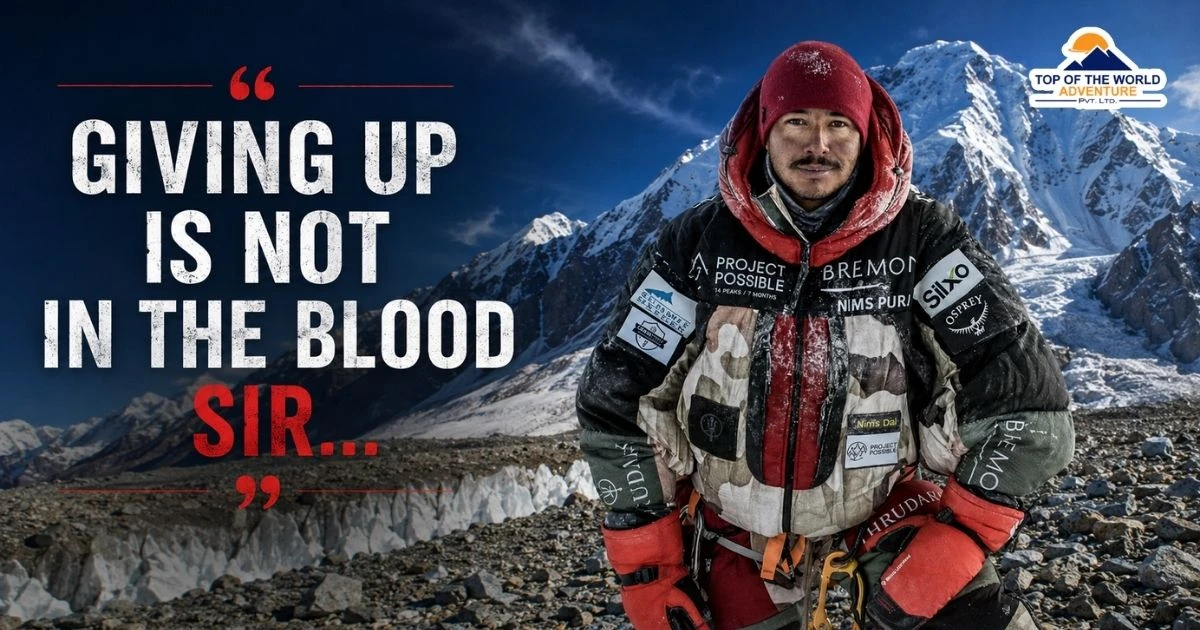
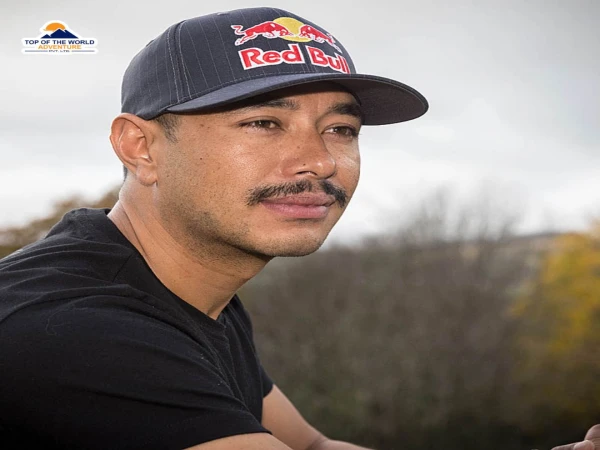
Nirmal “Nims” Purja built a life around challenges that most people would consider impossible.
From his childhood in Nepal to service with the Gurkhas and Britain’s Special Boat Service, and eventually to record-breaking expeditions across the Himalaya and Karakoram, Nims became one of the most internationally recognised figures in modern mountaineering.
His achievements were measured in summits and records, but his wider influence went beyond statistics. He helped bring greater international attention to the skills, leadership and professionalism of Nepali high-altitude climbers.
His final expedition took him back to Broad Peak in Pakistan, a mountain he had climbed several times before. Following an avalanche on July 30, 2026, the expedition turned into a major search and recovery operation.
This is our tribute to his journey.
From Myagdi to the Gurkhas
Nirmal Purja was born on July 25, 1983, in Dana, Myagdi, close to the Dhaulagiri region of Nepal.
His family later moved to Chitwan, where he grew up and attended school. Several of his elder brothers served in the Gurkhas, and military service became an important ambition in his early life.
In 2003, at the age of 18, Nims joined the British Army’s Brigade of Gurkhas.
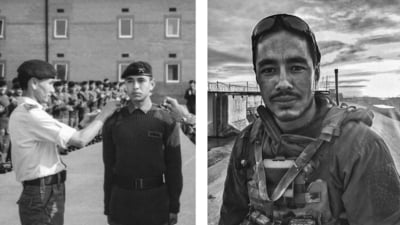
He served with the Queen’s Gurkha Engineers and spent approximately six years in the Gurkhas before achieving another exceptional milestone.
In 2009, he passed the demanding selection process for the Royal Navy’s Special Boat Service (SBS), becoming the first Gurkha to serve in the elite unit.
His military career gave him experience in extreme environments, physical endurance, leadership, risk assessment and operating under pressure. These qualities would later become central to his mountaineering career.
Discovering High-Altitude Climbing
Surprisingly, Nims did not begin his professional life as a mountaineer.
His serious interest in climbing developed while he was already serving in the military.
During leave in 2012, he travelled towards Everest Base Camp and climbed Lobuche East, reaching above 6,000 metres for the first time.
That experience changed the direction of his life.
Only two years later, on May 18, 2014, he reached the summit of Dhaulagiri (8,167 m), his first 8,000-metre mountain.
In 2016, he stood on the summit of Mount Everest for the first time.
By then, it was becoming clear that Nims possessed an unusual ability to move quickly and effectively at extreme altitude.
Everest, Lhotse and Makalu: The Records Begin

In May 2017, Nims participated in the Gurkha Everest Expedition marking 200 years of Gurkha service to the British Crown.
The same season produced one of his first major mountaineering records.
He climbed Everest and Lhotse on May 27, followed by Makalu on June 1.
The speed of those ascents demonstrated the climbing style that would later define his career: ambitious objectives, rapid movement between mountains, strong logistics and carefully coordinated teams.
In 2018, after approximately 16 years of military service, Nims left the armed forces to pursue mountaineering full time.
It was an enormous personal gamble.
He reportedly remortgaged his home to help finance the project that would soon make his name known around the world.
Project Possible: 14 Peaks in 6 Months and 6 Days
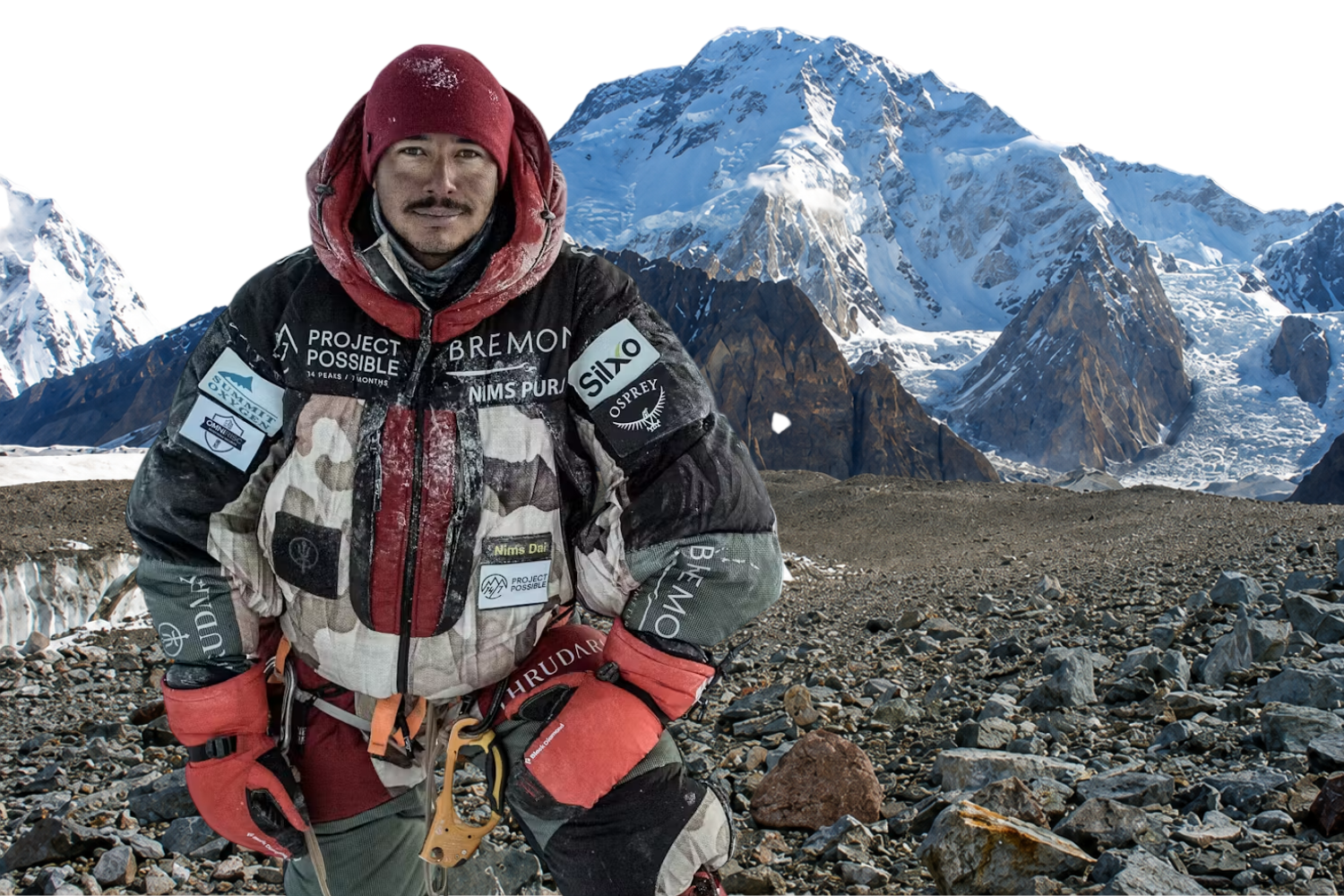
At the end of 2018, Nims announced an objective that sounded almost unrealistic:
Climb all 14 mountains above 8,000 metres in seven months.
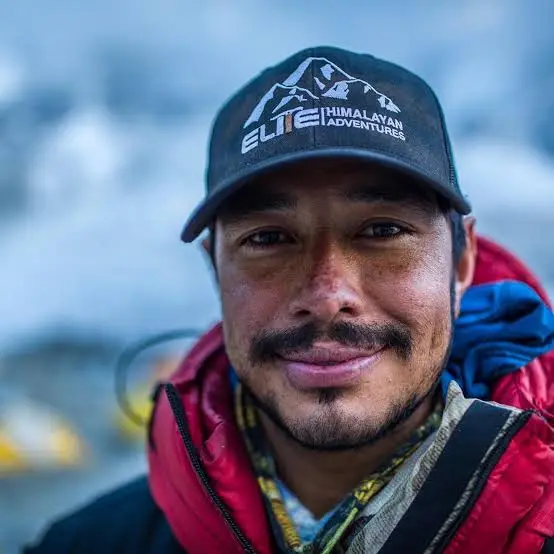
Before his attempt, completing all fourteen had taken climbers years.
Nims called his mission Project Possible.
He began on Annapurna on April 23, 2019.
What followed was one of the most remarkable periods in modern high-altitude mountaineering.
Phase One: Nepal
Nims climbed:
AnnapurnaDhaulagiriKanchenjungaEverestLhotseMakalu
During this period, he was also involved in rescue efforts for climbers in serious difficulty.
On Everest, Nims captured the now-famous photograph showing a long line of climbers approaching the summit. The image travelled around the world and became part of an international debate about crowding on Mount Everest.
By May 24, he had completed the first six mountains of Project Possible.
Phase Two: Pakistan
The expedition then moved to Pakistan.
Between July 3 and July 26, Nims climbed:
Nanga ParbatGasherbrum IGasherbrum IIK2Broad Peak
Five 8,000-metre mountains in just 23 days.


The Final Mountains
He then returned to the Himalaya for:
Cho OyuManasluShishapangma
On October 29, 2019, Nims reached the summit of Shishapangma.
Project Possible was complete.
14 eight-thousanders.
6 months.
6 days.
The achievement transformed Nims from an accomplished Nepali climber into an international mountaineering figure.
K2 in Winter: A Historic Nepali Achievement

Another defining moment came in January 2021.
K2, at 8,611 metres, was the only 8,000-metre mountain that had never been climbed during winter.
A powerful Nepali team travelled to Pakistan to change that.
Conditions were severe. A storm destroyed equipment at Camp 2, forcing the expedition to reorganise and resupply.
On January 16, 2021, ten Nepali climbers reached the summit together, completing the first winter ascent of K2.
Nims was part of that historic summit team and reached the top without supplemental oxygen.
The achievement carried significance beyond one individual record.
For generations, Nepali and Sherpa climbers had played essential roles behind many of the greatest Himalayan expeditions while international climbers frequently received most of the recognition.
The K2 winter ascent placed Nepali climbers unmistakably at the centre of their own mountaineering story.
14 Peaks and Global Recognition

Nims’ story reached an even larger international audience with the release of the documentary “14 Peaks: Nothing Is Impossible” in November 2021.
The film documented Project Possible and introduced millions of viewers to the people, logistics, risks and determination behind the expedition.
His memoir, “Beyond Possible: One Soldier, Fourteen Peaks, My Life in the Death Zone,” also told the story of his journey from Nepal through military service and into elite mountaineering.
Beyond climbing, Nims became involved in tourism promotion, environmental advocacy and charitable work.
In 2022, he established the Nimsdai Foundation, supporting mountain communities, porters and related initiatives in Nepal and elsewhere.
Returning to the 14 Peaks Without Supplemental Oxygen
Having already completed all fourteen 8,000-metre mountains, Nims created another challenge for himself:
Do it again without supplemental oxygen.
The campaign began in 2022.
He climbed Kanchenjunga, Everest, Lhotse and K2 without bottled oxygen that year.
Further summits followed during 2023, including Annapurna, Makalu, Nanga Parbat, Gasherbrum I, Gasherbrum II, Broad Peak, K2 and Cho Oyu.
His planned Shishapangma attempt was interrupted in October 2023 after a deadly avalanche on the mountain.
Nims returned the following year.
On October 4, 2024, he reached the summit of Shishapangma without supplemental oxygen, completing another extraordinary chapter of his climbing career.
The Hat-Trick Challenge
Nims was still searching for new limits.
In 2024, he announced what became known as the Hat-Trick Challenge, built around repeated ascents of the fourteen 8,000-metre peaks together with the Seven Summits.
Through 2025 and 2026, he continued climbing across Nepal, Pakistan and other mountain regions.
His expeditions included further ascents of Kanchenjunga, Nanga Parbat, Gasherbrum peaks, Broad Peak, Manaslu and other major mountains.
His career tally continued rising, placing him among the most prolific high-altitude climbers of his generation.
In May 2026, he also completed another exceptionally fast Everest-Lhotse combination without supplemental oxygen.
Then came the 2026 Karakoram season.
July 2026: Returning to Pakistan
By July 2026, Nims was again climbing in Pakistan.
On July 21, he successfully climbed Gasherbrum II without supplemental oxygen.
Four days later, on July 25, he marked his 43rd birthday in Pakistan.
Broad Peak became his next objective.
It was a mountain Nims knew well. He had previously climbed the 8,051-metre peak during his record-breaking Project Possible campaign and on subsequent expeditions.
This time, however, conditions on the mountain would lead to tragedy.
July 30, 2026: Avalanche on Broad Peak
Around midday on Thursday, July 30, an avalanche struck a ten-member climbing team at approximately 6,600 metres on Broad Peak.
Nirmal Purja was among the climbers.
The team included Nepali mountaineers as well as international members.
Communication with the group was lost following the avalanche.
Satellite tracking information reportedly indicated sudden and significant movement down the mountain, immediately raising fears about the severity of the accident.
Pakistan-based mountain authorities and rescue teams began coordinating a search while Nepal's diplomatic authorities followed developments through the Nepalese Embassy in Islamabad.
Broad Peak’s altitude, unstable terrain and unpredictable weather made the operation extremely difficult.
July 31: Search Teams Find Four Climbers
On July 31, ground teams searching the avalanche area located four bodies.
At that stage, identification remained difficult and several members of the expedition were still unaccounted for.
Helicopters and specialised rescue personnel were deployed while teams continued searching the mountain.
News of the accident spread quickly across Nepal and the international climbing community.
For many people, hope remained that Nims and the missing climbers might still be found alive.
August 1: Nims Found on Broad Peak
On August 1, 2026, the search brought devastating news.
Nirmal “Nims” Purja had been found on Broad Peak.
His death brought an extraordinary mountaineering career to an end on one of the mountains that had formed an important part of his climbing history.
Attention then shifted from search operations to the technically difficult task of recovering and transporting his remains from the mountain.
August 2: Recovery Operation Begins
On August 2, rescuers physically reached Nims at approximately 5,700 metres.
The recovery team began the demanding process of lowering his remains through the mountain.
At such altitude, even a recovery operation requires exceptional skill.
Steep terrain, changing weather, avalanche exposure, altitude and limited helicopter landing possibilities mean that progress must be carefully coordinated between climbers on the ground and aviation teams.
August 3: Moving Toward the Helicopter Staging Area
As of August 3, 2026, the ground rescue team was transporting Nims’ remains through the lower mountain toward the Concordia/Japanese Camp area.
This area can serve as an important staging point closer to base camp, where terrain and conditions may permit helicopter operations more safely than on the higher sections of Broad Peak.
The recovery operation remains dependent on mountain conditions, visibility, weather and aviation safety.
More Than Records
Numbers tell only part of Nims Purja’s story.
Fourteen peaks in six months and six days.
The first winter ascent of K2 with a historic Nepali team.
Repeated ascents of the world’s highest mountains.
Extraordinary achievements without supplemental oxygen.
Dozens of 8,000-metre summits.
But his influence cannot be understood through statistics alone.
Nims arrived during a period when the international image of Himalayan mountaineering was changing.
For decades, Nepali high-altitude workers had carried enormous responsibility on major expeditions. They fixed routes, transported equipment, managed camps, guided foreign climbers and carried out rescues in some of the most dangerous environments on Earth.
Yet their names were too often missing from the international story.
Nims challenged that imbalance.
He spoke openly about the abilities of Nepali climbers and repeatedly highlighted the people climbing beside him.
His success helped demonstrate that Nepalis were not simply supporting Himalayan expeditions.
They were leading them.

A Legacy That Remains in the Mountains
Nirmal Purja lived much of his adult life in environments where the margin between success and disaster could be extremely small.
He understood those risks.
Yet he continued returning to the mountains, setting increasingly difficult objectives and encouraging others to reconsider what was physically and logistically possible.
His journey began far from international attention, in a village beneath Nepal’s great Himalayan ranges.
It took him through the Gurkhas, British special forces, Everest, K2, Annapurna, Dhaulagiri and every one of the world’s fourteen 8,000-metre mountains.
His final journey brought him back to Broad Peak.
For Nepal, his legacy carries particular meaning.
He helped place Nepali mountaineers at the centre of the global climbing conversation and inspired a generation to recognise that Himalayan expertise, leadership and ambition could come from the people who grew up beneath these mountains.